From southern Thai rooflines and lotus ponds to tropical hardwoods, garden spas and spirit-honouring sculptures, these are the design details that give a Koh Samui hotel a genuine sense of place.
Koh Samui has no shortage of beautiful hotels, but the most memorable ones feel like they belong to the island. Traditional Thai design does more than look good in photos. It creates cooler, shaded spaces suited to the tropics, connects guests with local culture and turns everyday moments, from walking to breakfast to soaking in the bath, into part of the experience.
If you are looking for a hotel in Koh Samui with authentic Thai character, here are the design elements worth looking for before you book.
1. Southern Thai Architecture – Rooflines and Low-Rise Buildings
Hotels inspired by southern Thai architecture often feature low-rise buildings with pitched roofs that blend naturally into the landscape rather than dominating it. This style keeps the resort feeling intimate and lets gardens and palm trees take centre stage.
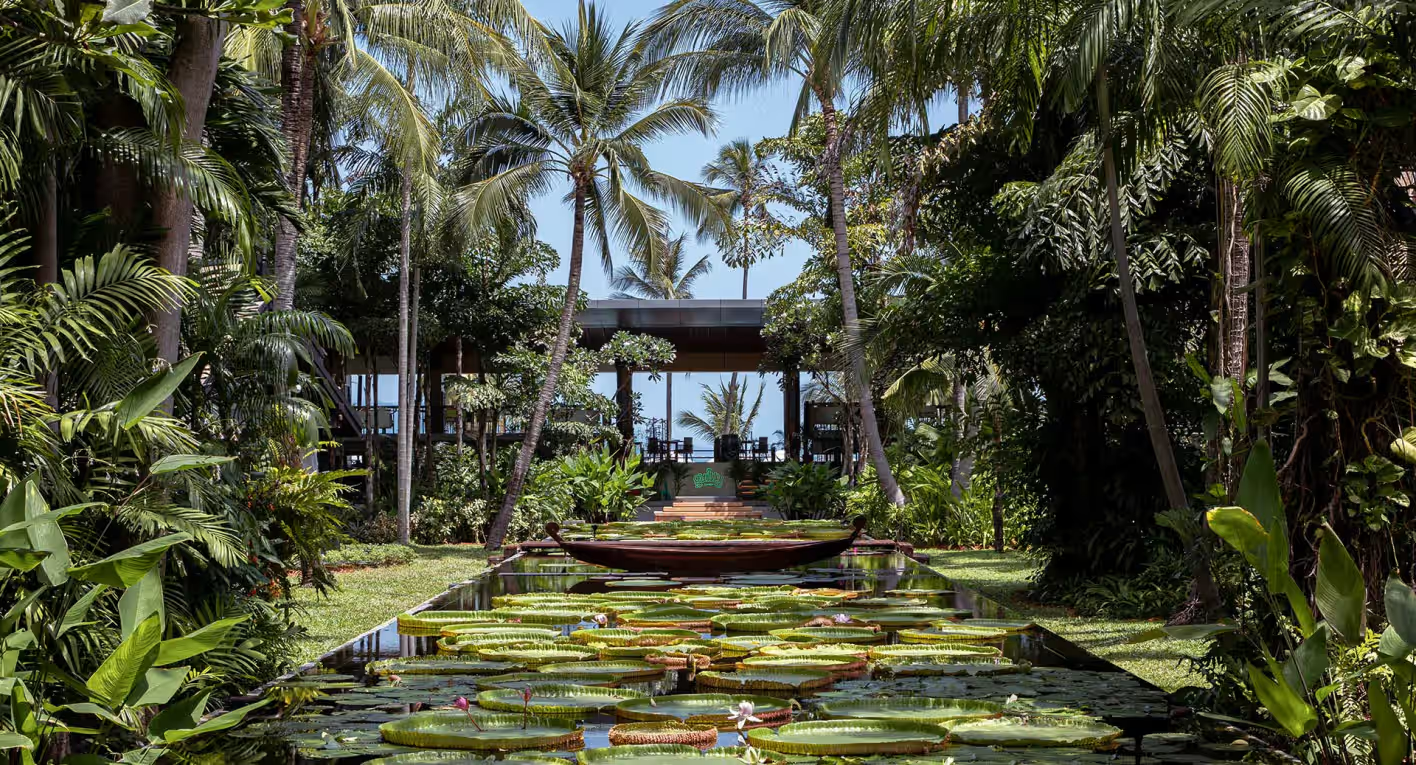
At Anantara Bophut Koh Samui Resort, the 106 rooms and suites are inspired by southern Thai architecture and sit in low-rise shingled buildings overlooking a central lily pond.
Key Highlights
- Low-rise buildings that sit gently within the landscape
- Pitched rooflines inspired by regional homes
- A more intimate, village-like resort atmosphere
2. Lotus and Lily Ponds – Water as the Heart of the Design
Water features play an important role in Thai design, bringing a sense of calm and helping to cool the surrounding spaces. Lotus and lily ponds are especially meaningful, as the lotus is a symbol of purity in Buddhist culture.
The best examples build their landscaping around lily ponds, and some resort spa gardens spread over 3,000 sqm of lotus ponds and greenery.
Key Highlights
- Ponds that create a calm, cooling atmosphere
- The lotus as a meaningful cultural symbol
- Ponds woven through the gardens and spa
3. Tropical Gardens – Landscapes That Tell a Story
The best Thai-inspired hotels are designed around their gardens rather than simply decorated with plants. Mature trees, shaded paths and native planting help guests feel connected to the island’s natural surroundings.
Renowned architect and landscape designer Bill Bensley is known for this approach. On Koh Samui, he created the spectacular landscaping and spa garden at a Bophut resort on land that was once a coconut plantation.
Key Highlights
- Gardens that preserve the island’s natural character
- Shaded walkways for cooler days
- Design that respects the original landscape
4. Tropical Hardwood and Natural Materials
Natural materials such as wood, stone and woven textures give Thai interiors their warmth. Many hotels use tropical hardwoods, earthy colour palettes and handcrafted details to create rooms that feel relaxing and connected to their surroundings.
Look for rooms decorated in warm, earthy tones with contemporary Thai décor, creating a calm space that feels connected to the gardens outside.
Key Highlights
- Warm hardwoods and earthy colour palettes
- Handcrafted, locally inspired details
- Interiors that bring nature indoors
5. Open-Air Living – Balconies, Daybeds and Sala-Style Spaces
Traditional Thai homes are designed for life outdoors, with shaded terraces and open-sided spaces that catch the breeze. Look for rooms with generous balconies, daybeds and outdoor seating areas where you can relax in the fresh air.
Look for rooms with a private balcony and daybed, or suites that open onto terraces, some with their own plunge pools.
Key Highlights
- Balconies and terraces for outdoor living
- Daybeds for afternoon naps in the breeze
- Indoor and outdoor spaces that flow together
6. Spa Design Rooted in Thai Healing Traditions
A spa can say a lot about a hotel’s commitment to Thai culture. Look for spas that use indigenous ingredients, offer traditional Thai massage and are designed as peaceful garden retreats rather than enclosed treatment rooms.
Look for spas with standalone treatment suites set among lily ponds, alfresco showers and terrazzo bathtubs, where indigenous ingredients and local healing traditions take centre stage.
Key Highlights
- Garden settings designed for privacy and calm
- Indigenous ingredients and traditional techniques
- Treatment suites that connect with nature
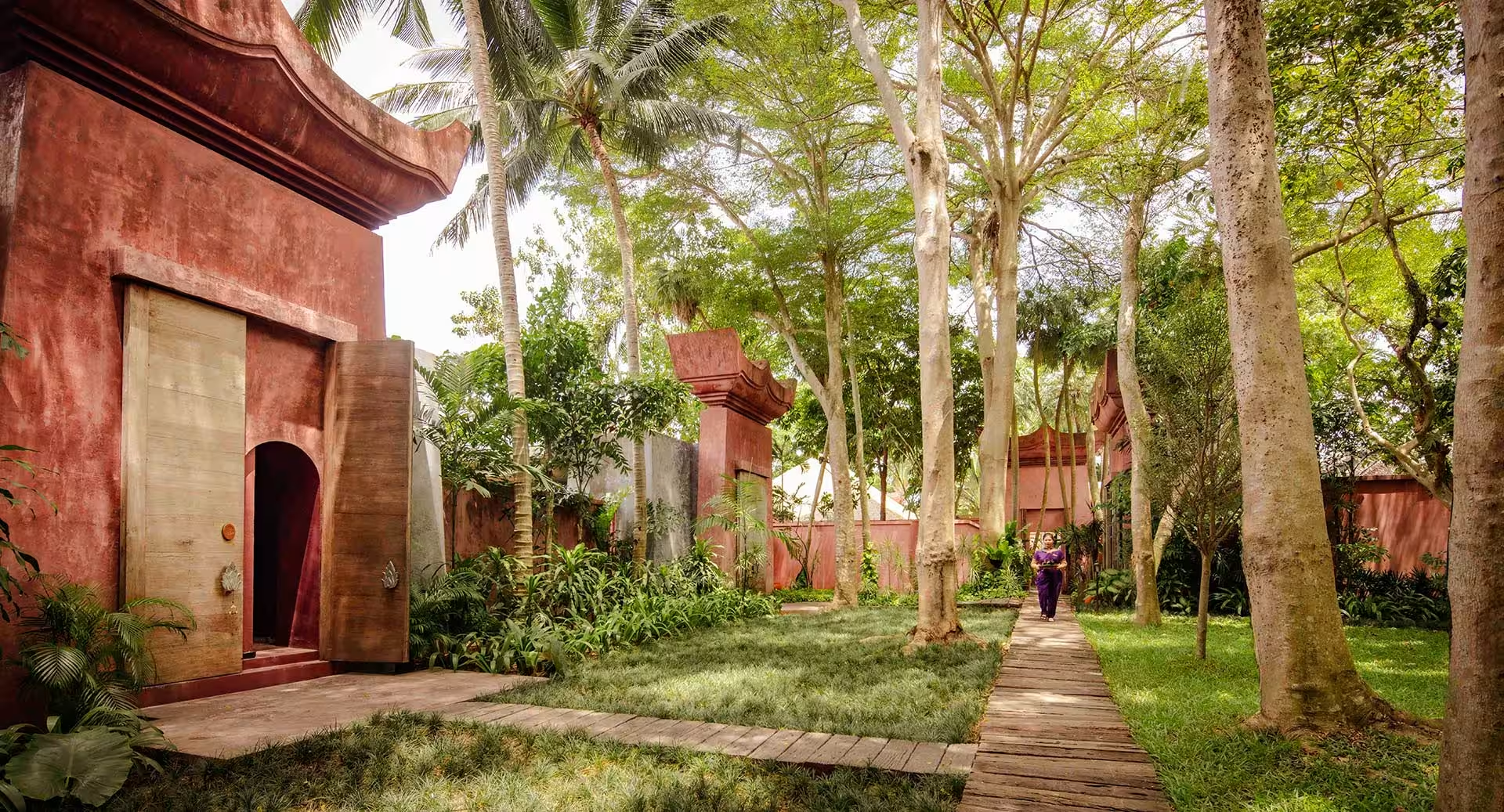
Image via Anantara Bophut Koh Samui Resort
7. Cultural Details – Art, Sculpture and Local Symbolism
Small details often reveal the most about a hotel’s character. Sculptures, artwork and symbols drawn from local beliefs and traditions show that a hotel has been designed with care and respect for its setting.
In Bophut, Bill Bensley commissioned monkey statues to honour the role of monkeys in local culture. On the northern end of Chaweng Beach, Anantara Lawana Koh Samui Resort weaves bird motifs into its pool suites, celebrating Koh Samui’s bird-singing competitions.
Key Highlights
- Artwork and sculpture inspired by local culture
- Symbols that reflect island traditions
- Thoughtful details that add a sense of place
Conclusion
Traditional Thai design turns a hotel stay into a cultural experience. By looking for southern Thai architecture, lotus ponds, tropical gardens, natural materials, open-air living spaces and spas rooted in local healing traditions, you can find a Koh Samui hotel that feels truly connected to the island.
When you book, look past the room photos and notice the rooflines, gardens, materials and small cultural details. They’re what make a stay feel genuinely Thai.

You might also like